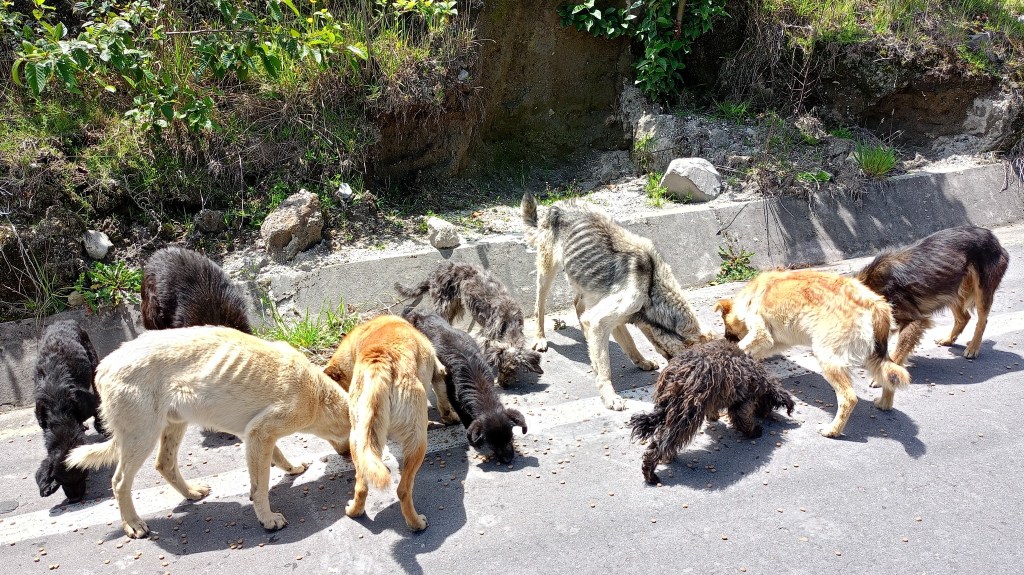
I apologize for the disturbing photo above, but it perfectly represents something I’ve always struggled with: accepting the pain in the world. What can I do? How do I set a boundary so that I don’t completely deplete myself emotionally, mentally, physically, and financially? On Yule, the winter solstice, I always choose a word for the upcoming year. I selected Acceptance for 2024. I want to practice accepting things as they are, which is difficult here in Ecuador sometimes.
Just like the rest of the world, Ecuador has its painful circumstances: hunger, domestic abuse, addiction, and mental illness. These dogs in the photo above belong to a family in an indigenous community who cannot afford to feed them, much less sterilize them to stop the cycle. Luckily, a Canadian expat named Brian Sullivan has taken it upon himself to travel the province looking for animals in need and providing food. (You can help support him like I do if you feel called to do so by making a donation to his PayPal account @sullyman48582). He works with a non-profit called Amici Cannis, which I also support to help injured and sick animals as well help families with their pets through a sterilization program.
As I sit here writing listening to Van Morrison’s “Into the Mystic,” I still wonder if I’m doing enough to make a difference in the world. I feel so powerless sometimes. However, like Brian, I choose to do the best I can. We can’t give up. We have to find a balance between doing what we can and accepting that we can’t change everything.
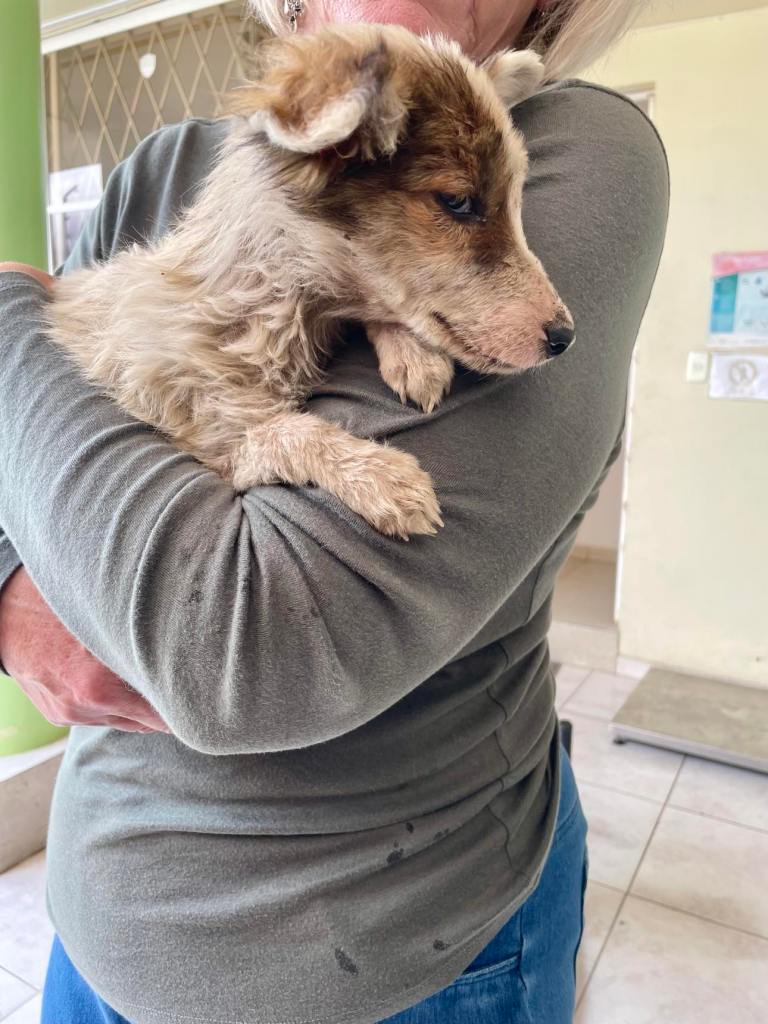
I am helping two families with their animals. I prefer just to donate to Brian and Amici Cannis, but the first family I met distributing food on Christmas, and the other family had this little puppy (pictured below) that was sick. The indigenous grandmother didn’t want me to take it to the vet, but my friend persuaded her in Kichwa that I would return it when it was better. (I wanted to let Amici Cannis find it a home, but she wouldn’t let me take it without the promise to return it–and a promise is a promise.) It tested negative for parvo and distemper but positive for coronavirus. Cats can’t catch it, so he lived in my bathroom until he was better. That was a hard one for me to accept–that I had to take him back to his home in the dirt with eight other dogs. Luckily, the grandmother agreed to let Amici Cannis help vaccinate and sterilize the other dogs, too. I can buy food for the dogs, and I can check on them, but I can’t take the dogs to a new home. I have to accept that.

It’s not just the dogs and cats that need help. I meet several people begging on the streets every day.
I regularly give a dollar or whatever change I have to two Kichwa grandmothers I’ve come to recognize on the streets of my town. I don’t have pictures of them because I don’t know how to ask their permission to take their picture, and it would be disrespectful just to take one. They are probably in their 80s, and they speak only Kichwa, so they beg for money by placing their prayer hands in front of their wise old hearts and try to make steady eye contact with people. When I greet them in Kichwa, their faces light up, and I press a dollar coin into their soft, wrinkled palms with a smile. At first it was awkward because I couldn’t even ask, “How are you?” but we can say a lot with our eyes. That’s how women communicate best anyway. I want to ask if they need anything specific or question if they have family to go home to, someone to love them and whom they can love. But I haven’t gotten that far in my Kichwa studies yet. Is giving them a dollar every time I see them enough? No. But it’s all I can do at this point. And I have to accept that.
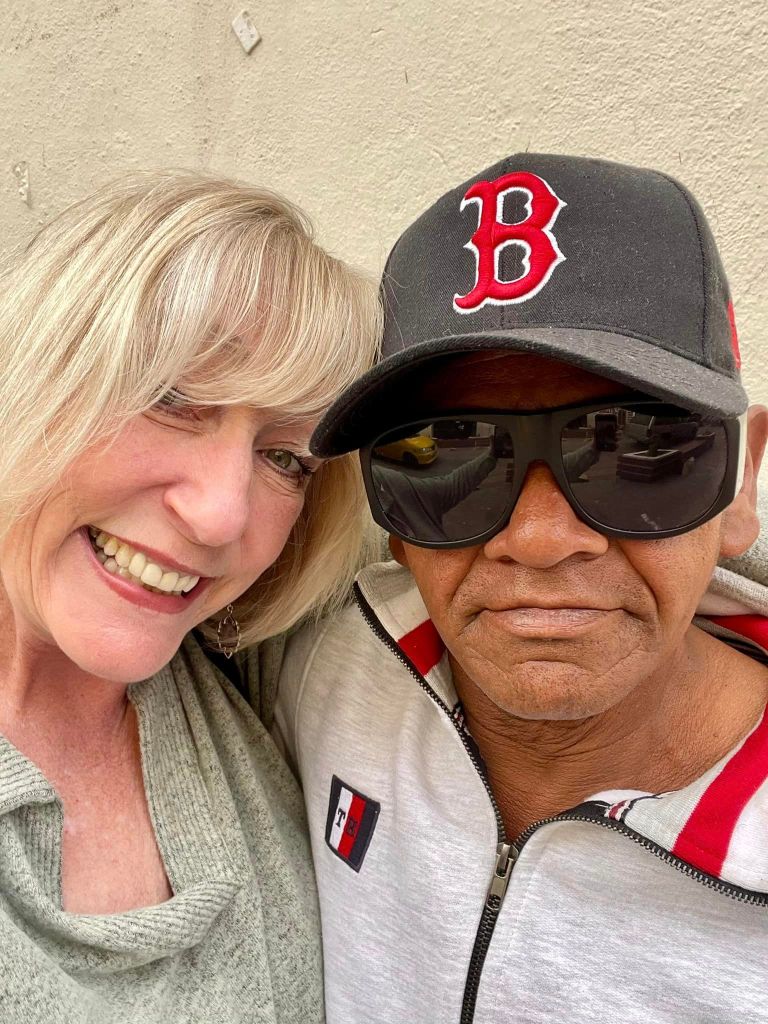
Another person I try to help is Jose Luis. He’s only a year older than I am, but he lost a leg in an accident when he was 15. He’s a Venezuelan refugee who has no children. He lives in the neighboring town of Otavalo with his sister who is in her 70s. He’s usually outside the Tia grocery store, and we talk while I wait for my taxi driver. He always asks me, “Did you call Ruben?” If I can’t get Ruben or his cousin Jaime on the phone, Jose Luis helps me flag down a taxi by yelling, “Ay, taxi!” He asks about my cats and my son, and he tells me about his sister and her grandchildren. I give him change and buy him an orange juice. Sometimes, I give him money for eye drops. He disappeared for five months, and no one knew where he went. I was so worried about him because I knew he had cataracts and couldn’t see well–not to mention that he walks with crutches. But what could I do? Nothing. That was hard to accept. Then, when I returned from the states after the holidays, there he sat on the ground leaning against the brick wall of the store. He had had cataract surgery. He doesn’t have all his teeth, and with his Venezuelan accent and fast speech, sometimes I don’t understand all he says, so I’m not sure how he was able to get the surgery, but he did, and he’s getting the other eye done in February. I’m learning to accept that I can’t fix all the problems someone has, but I can be kind and give what I can. Sometimes, as I see people walk by him without a glance toward his outstretched hand, I think the hugs and the conversation are the best I can give.

Speaking of hugs, Maria is the precious indigenous woman who sells strawberries on the street. From the first time I was introduced to her, she has always hugged me tightly around the waist. As an empath, I can sense a sadness in her, and I know she needs those hugs just as much as I do. (Sometimes that’s the only human touch I receive that day, and touch is my first love language.) I wish I could do more for her than just buy strawberries and cherries and give her a hug. I wanted to send her this picture, but she doesn’t have a phone (luckily, I’ve been here long enough to check my white privilege and not assume things, so I asked her first if she had a phone). I posted the picture on my Facebook page with a story about how much I love her. The next time I saw her, I showed her the post and told her what it said and showed her how many people responded. Her smile made my day. But what I really wanted to do was add her to my phone plan and buy her a phone. I have to accept that I don’t have that much money. What I do have–what we all have–is the capacity to open our hearts and eyes and see people. I think that’s all I really want in life: to be really seen. That’s what we all want. We want to matter to someone.
When I’m haunted by something horrible in the world, the Serenity Prayer helps: “God grant me the serenity to accept the things I cannot change, courage to change the things I can, and the wisdom to know the difference.” I give myself lots of Reiki every day, and I send Reiki to situations in the world that need healing. When I feel that existential sting that accompanies every tragedy or sadness I witness and I want to scream, “This isn’t right,” what has helped me the most is turning my critical eye on myself instead of outward. I have certainly been able to change more things about myself than I can change others or change some tragic situations. And I accept that.
 Karina Andina